

Can You Combine Reef & Offshore Fishing in One Key West Fishing Trip?
Most anglers think they have to pick a lane. Reef or offshore. Snapper or sailfish. But Key West doesn't work that way — and if you're limiting yourself to one or the other, you're missing the point. The reefs sit close enough to shore that you can load the cooler by mid-morning, then push out to the blue water before lunch. It's not about compromise. It's about maximizing what's already in front of you.
So here's the reality. If you're booking a charter with the right captain, you don't have to choose. You fish the structure first, then run the spread offshore. Different tackle, different targets, same trip. Just don't expect to do it all in four hours. Every mile counts, and so does every decision about where to drop lines.
Geography That Actually Works in Your Favor
Key West sits where the Atlantic meets the Gulf, surrounded by coral structure and deep current. That's not marketing talk — it's why the fishing here is different. The reefs are minutes from the dock, and the Gulf Stream runs close enough that you're not burning half a tank just to get there.
Most destinations force you to pick your water. Here, the water picks itself based on what's biting and how much time you've got. Captains who know the area can read conditions fast and adjust without wasting your day. That flexibility is what makes combination trips possible in the first place.
What Reef Fishing Actually Looks Like
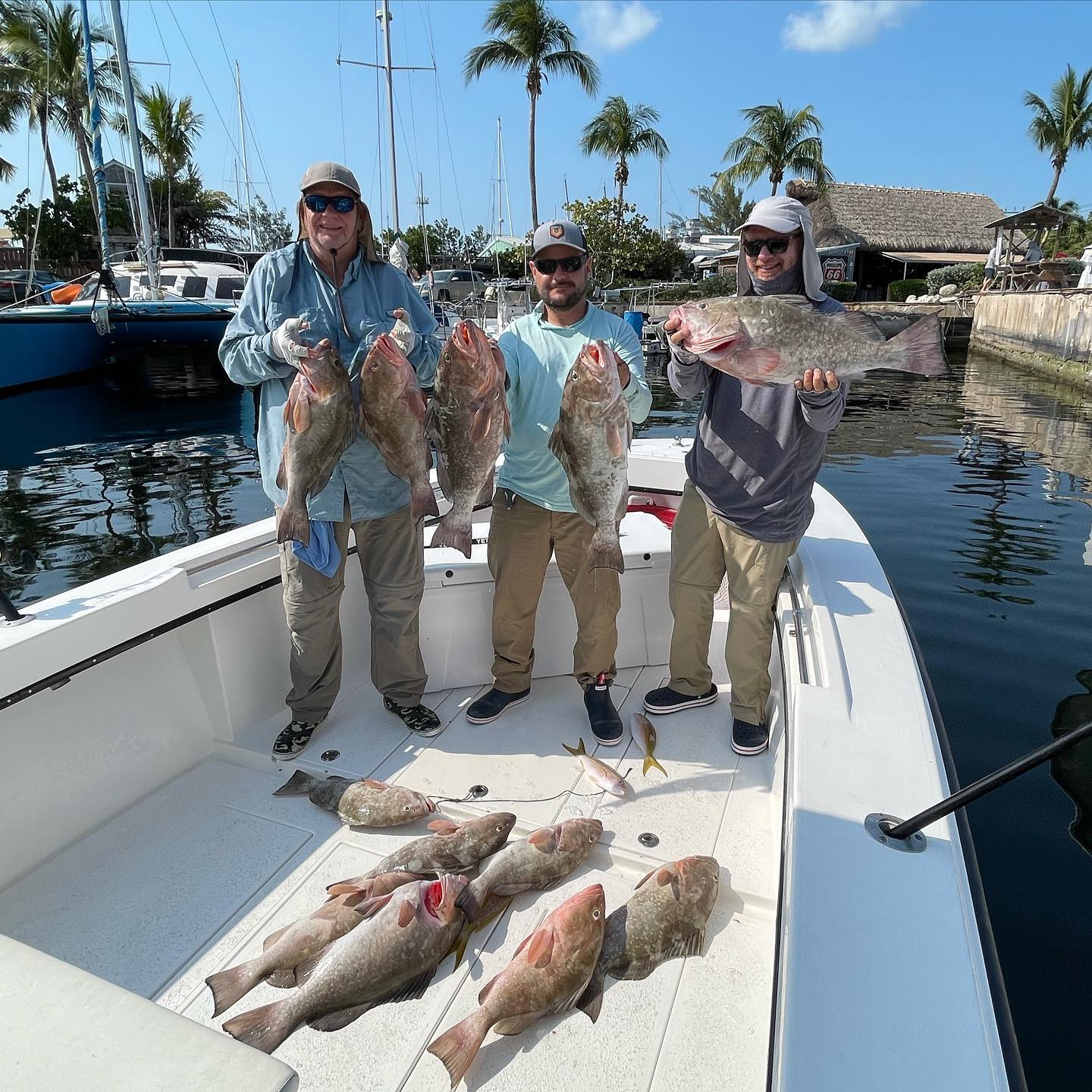
Reef fishing means anchoring over structure — coral heads, ledges, wrecks — and dropping bait or jigs into the zone. You're targeting snapper, grouper, hogfish, and anything else holding near the bottom. It's not passive. The bites come fast when you're on the right spot, and the fish fight harder than most people expect.
Light tackle works here, which makes it accessible even if you've never fished saltwater before. But don't mistake accessible for easy. Yellowtail snapper are picky eaters, and grouper will take you straight into the rocks if you give them slack. The reef teaches you to stay sharp or lose fish — sometimes both.
Offshore Means Bigger Water and Bigger Targets
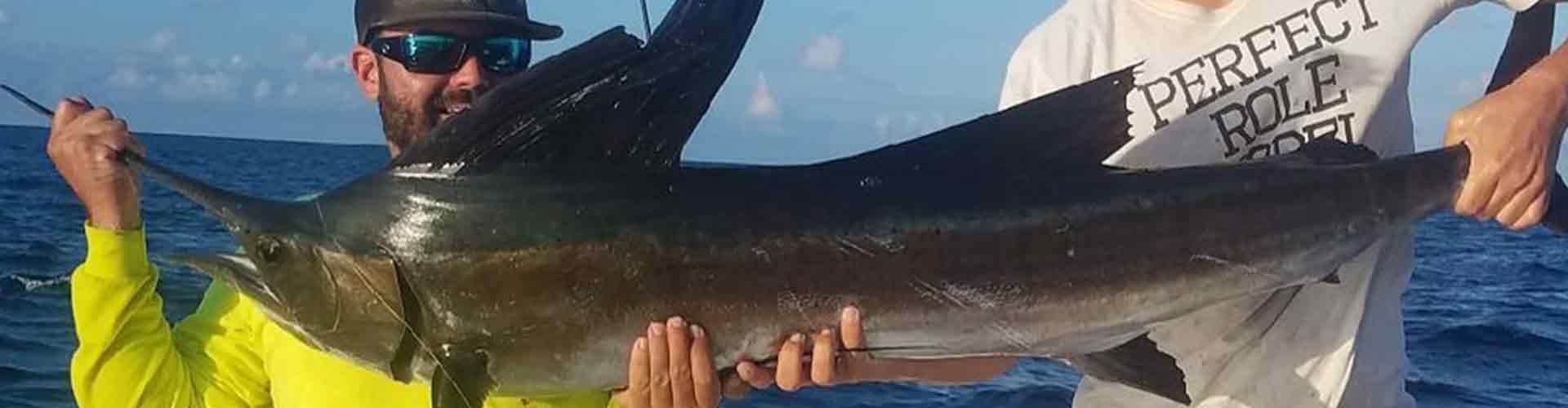
Offshore fishing takes you past the reefs and into the current. You're trolling now, covering water with lures or rigged baits, looking for mahi, tuna, wahoo, or billfish. The strikes are explosive. The runs are long. And the fight can last anywhere from five minutes to an hour depending on what you hooked and how well you handle the rod.
This is where the gear gets heavier and the stakes get higher. You're not just hoping for a bite — you're hunting fish that move fast and hit hard. Offshore fishing rewards patience and punishes mistakes. Miss the hookset or let the line go slack, and that fish is gone before you process what happened.
Why Combination Trips Make Sense
Combining both styles in one outing isn't just possible — it's one of the smartest ways to fish Key West. You start on the reef while the morning bite is hot, fill the cooler with quality table fare, then transition offshore when the sun climbs and the pelagics start moving. It's two completely different experiences without splitting your trip across multiple days.
The variety keeps everyone engaged. If you've got a mixed group — some who want action, others chasing trophies — this approach covers both. And if one bite slows down, you've got a backup plan already built into the schedule. That's not luck. That's strategy.
What a Combination Day Looks Like
- Early departure to hit the reefs during prime feeding windows
- Anchor over productive structure and target snapper, grouper, or hogfish
- Switch gears mid-trip and run offshore to troll for mahi, tuna, or sailfish
- Adjust based on conditions, bite windows, and what the captain is seeing on the water
- Return with a mixed bag that covers both dinner and bragging rights
Booking the Right Charter Matters
Not every boat is set up for this. Some captains specialize in reef fishing. Others only run offshore. If you want both, you need to book with someone who's equipped and experienced enough to handle the transition. That means the right tackle, the right electronics, and the right knowledge of when to move and where to go.
A full-day trip — usually eight hours — gives you enough time to do both without rushing. Anything shorter and you're cutting corners. Talk to the captain before you book. Make sure they understand what you're after and that the boat can handle both environments. If they hesitate or try to steer you toward one or the other, keep looking.
Conditions Will Shape the Plan
- Wind and swell can make offshore uncomfortable or unsafe, even if the forecast looked clean
- Current strength affects both reef fishing and trolling success
- Water temperature shifts can push pelagic fish closer or farther from shore
- Bait availability changes daily and impacts what's feeding where
- Your captain will adjust in real time — flexibility beats stubbornness every trip
Gear and Tackle Get Swapped Mid-Trip
Reef fishing uses lighter rods, smaller hooks, and bottom rigs. Offshore requires heavier setups, trolling lures, and wire leaders. A good charter will have all of it ready and rigged before you leave the dock. You're not expected to bring your own gear unless you want to — most operators provide everything you need.
The transition happens fast. Once the captain decides it's time to move offshore, the crew will stow the reef gear and set the trolling spread. You don't have to know how it works. You just have to be ready when the rod bends and the reel starts screaming.
What You'll Bring Home
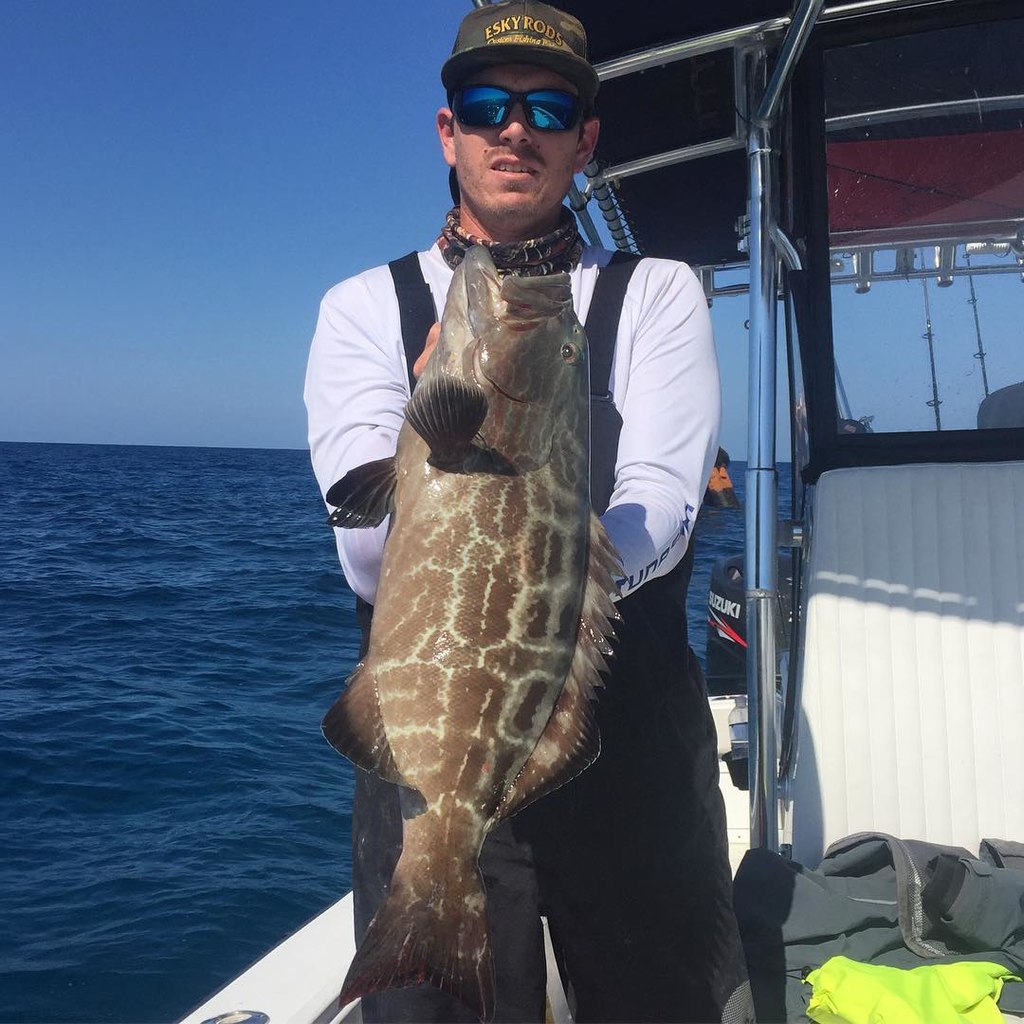
- Snapper and grouper fillets for the grill or fryer
- Mahi steaks that taste better fresh than anything you'll find at a restaurant
- Photos of fish that actually look like the ones in the brochures
- Stories that don't require exaggeration to sound impressive
- A better understanding of what Key West fishing is really about
Common Mistakes That Cost You Fish
Trying to cram too much into a half-day trip is the fastest way to end up disappointed. You'll spend more time running than fishing, and neither the reef nor the offshore bite will get the attention it deserves. Book the full day or don't bother with the combination at all.
Another mistake is ignoring the captain's advice. If they say the offshore bite is slow and suggest staying on the reef longer, listen. They're reading the water, not the clock. Pushing offshore just to check a box usually ends with a long, fishless troll and a cooler that could've been fuller.
Who This Trip Works Best For
- Anglers who want variety and don't want to pick just one style
- Groups with mixed experience levels or different fishing goals
- Visitors who only have one day and want to see what Key West fishing is really about
- Anyone chasing both table fare and trophy potential in the same outing
- Fishermen who trust their captain and value adaptability over rigid plans
Timing and Seasons Play a Role
Certain times of year favor offshore fishing more than others. Mahi run strong in spring and early summer. Sailfish show up in winter. Tuna can be hit or miss depending on water temp and bait schools. The reef, on the other hand, fishes well year-round. Snapper and grouper don't migrate — they just move between spots based on conditions.
If you're planning a combination trip, ask your captain what's biting when you'll be there. They'll know what's realistic and what's a long shot. That conversation alone can save you from booking the wrong kind of trip at the wrong time of year.
Two Fisheries, One Unforgettable Day
Key West gives you options most places can't. The reefs are close. The offshore water is accessible. And the captains who run fishing charters in Key West know how to make both happen without turning your day into a logistics nightmare. You don't have to settle for one type of fishing when the geography and the expertise are already lined up in your favor. Just show up ready, trust the process, and let the water do what it does best.
Ready to Fish It All?
We believe every trip should be as action-packed and memorable as possible. If you want to experience both reef and offshore fishing in a single day, let’s make it happen together. Give us a call at 305-849-3098 to talk through your options, or book now and secure your spot for a day that covers it all.
‹ Back
Recent Posts
-
How Much Does It Cost to Go Fishing in Key West for 4 Hours?
September 25, 2026
-

How Much Do You Tip for a 6 Hour Fishing Charter in Key West?
September 11, 2026
-
How Much Does a Fishing Charter Cost in the Keys?
August 28, 2026
-
What Is the 80/20 Rule in Fishing in Key West?
August 14, 2026
-
What Is the 90/10 Rule in Key West Fishing?
July 31, 2026